



Canada’s Dental Waitlists: Reliable Dental Treatment in Turkey in 7 Days (April 2026)
As we move through April 2026, the landscape of healthcare in North America continues to face unprecedented challenges, particularly within the oral health sector. For many Canadians, the dream of a healthy, functional smile is often deferred by months—or even years—due to staggering backlogs in provincial and private systems. While Canada’s dental treatment infrastructure remains high in quality, the sheer volume of patients awaiting specialized care has reached a breaking point. This has led an increasing number of individuals to look across the Atlantic, where Dental Treatment in Turkey offers a sophisticated, rapid, and world-class alternative.
Contents
For a Canadian patient suffering from tooth loss or chronic dental pain, waiting six months for a specialist appointment is simply not a viable option. In contrast, the medical infrastructure in Istanbul has evolved to accommodate international patients with a level of efficiency that allows for comprehensive rehabilitations in less than a week. By leveraging advanced digital workflows and a high concentration of specialized prosthodontists, clinics like Estesie Dental have streamlined the patient journey. In this guide, we will explore why the 2026 waitlist crisis exists and how you can secure reliable, high-end dental care in Turkey without the long-term delay, while also analyzing the competitive Dental Implant Prices in Turkey compared to the rising costs in North America.
The 2026 Canadian Dental Crisis: Why Waitlists are Growing
The current state of dental care in Canada in 2026 is a complex tapestry of high demand and systemic bottlenecks. Despite various federal initiatives aimed at increasing accessibility, the reality on the ground for many citizens remains one of frustration. Understanding the “why” behind these delays is the first step for any patient considering their options for Dental Treatment in Turkey.
The Reality of Canada’s Dental Treatment Access in 2026
By 2026, the expansion of the Canadian Dental Care Plan (CDCP) has successfully brought more people into the system. However, this influx of newly eligible patients has not been met with a proportional increase in the number of practicing dentists and specialists. In major urban centers like Toronto, Vancouver, and Montreal, the result is a “gridlock” effect.
Patients often find that while they now have the coverage or the means to pay, the available “chair time” is at a premium. Simple cleanings might be scheduled weeks in advance, but more complex needs—such as endodontics or restorative surgery—often require waiting lists that stretch into the next quarter. This delay isn’t just a matter of convenience; for many, it leads to a deterioration of oral health, where a simple cavity eventually requires a root canal or an extraction because it wasn’t addressed in time.
Understanding the Backlog: Public vs. Private Care in Canada
There is a common misconception that the waitlist issue is confined to the public sector. In 2026, even private-pay patients are feeling the squeeze. The overhead costs for Canadian clinics—ranging from labor to medical-grade supplies—have risen significantly over the last few years. To maintain profitability, many clinics have had to reduce their hours or limit the number of complex cases they take on.
Furthermore, the “brain drain” of dental professionals moving into administrative or specialized research roles has left a gap in general practice. When you compare this to the environment for Dental Treatment in Turkey, the difference in “throughput” is stark. Turkish clinics are often designed as “one-stop shops,” housing their own laboratories and imaging centers, which eliminates the weeks-long wait for external labs that is common in the Canadian private system.
Why Specialized Procedures Face the Longest Delays
If you are looking for Canada’s dental treatment for a single filling, you might get in within a month. However, if your needs are specialized—think dental implants, complex bridge work, or full-mouth “Hollywood Smile” makeovers—you enter a different tier of the waitlist. Specialized procedures require:
-
Specialist Consultation: Often requiring a referral from a general dentist, adding weeks to the timeline.
-
Advanced Imaging: If the clinic doesn’t have an in-house CBCT scanner, you must wait for a slot at a diagnostic center.
-
Laboratory Fabrication: Standard turnaround for high-quality crowns or bridges in Canada is currently 2 to 3 weeks.
For an international patient, this fragmented process is the primary barrier. When you look at the Dental Implant Prices in Turkey, you aren’t just looking at a cheaper price tag; you are looking at a system where these three steps happen in a single afternoon. This efficiency is why “under 7 days” isn’t just a marketing slogan in Istanbul—it is a standard operating procedure.
Why Canadians are Choosing Dental Treatment in Turkey
The shift toward Turkey as a premier destination for dental care is not a new phenomenon, but by 2026, it has become a mainstream choice for the Canadian middle class. It is no longer just about “cheap” dentistry; it is about “reliable” and “efficient” dentistry.
The “7-Day” Promise: How Turkish Clinics Optimize Efficiency
The most common question Canadian patients ask is: “How can you do in 7 days what my dentist says will take 4 months?” The answer lies in the integration of the workflow. In Turkey, particularly at high-volume centers, the dental lab is literally in the same building as the surgery.
When a patient arrives for Dental Treatment in Turkey, the process is accelerated through:
- Immediate Loading Protocols: For suitable candidates, implants can be placed and temporary (or even permanent) restorations fitted much faster than traditional “wait-and-see” methods.
- Digital Impressions: No more goopy molds sent through the mail. Digital scans are sent via internal servers to the lab technicians instantly.
- Extended Hours: Unlike many North American clinics that operate on a strict 9-to-5 basis, Turkish international clinics often work in shifts to ensure that lab work is completed overnight.
This allows a patient to fly in on Sunday, have their initial surgery or preparation on Monday, and fly out the following Sunday with a completely restored smile. For a busy professional in Calgary or a retiree in Halifax, the time saved is as valuable as the money saved.
Comparing Technology: CAD/CAM and Digital Dentistry in Istanbul
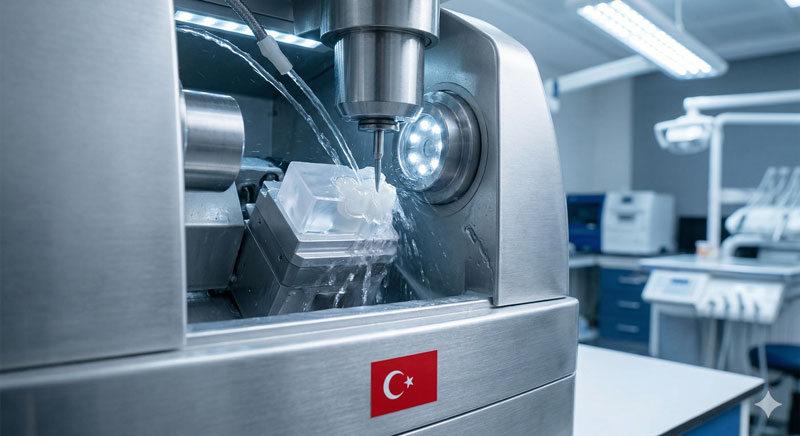
Turkey has invested billions into its medical tourism infrastructure. In 2026, many clinics in Istanbul are more technologically advanced than the average neighborhood clinic in suburban Canada. The use of CAD/CAM (Computer-Aided Design and Computer-Aided Manufacturing) technology is the backbone of the Turkish dental success story.
With CAD/CAM, a technician can design a crown or a veneer on a computer screen with micron-level precision. A milling machine then carves that restoration out of a solid block of Zirconia or E-max ceramic in less than 20 minutes. This technology reduces the margin for human error and ensures a perfect fit, which is critical when you are providing Dental Treatment in Turkey for a patient who lives 9,000 kilometers away and cannot easily return for minor adjustments.
The Role of Medical Tourism in Modern Oral Health
Medical tourism has matured into a sophisticated industry. In 2026, it is governed by strict regulations from the Turkish Ministry of Health, which mandates that clinics treating international patients must hold specific certifications. This regulatory oversight provides Canadians with a layer of trust that was perhaps missing a decade ago.
When you choose to bypass Canada’s dental treatment waitlists, you are entering a global market where clinics compete on the basis of their success rates and patient reviews. This competition has driven the quality of care in Turkey to elite levels, making it a hub for complex cases that local dentists in Canada might be hesitant to take on.
If you are currently facing a long wait or have received a quote that seems out of reach, you can get an immediate professional opinion without leaving your home. Many patients find it helpful to start a conversation on WhatsApp to discuss their specific case and get a preliminary assessment.
2026 Technological Advancements: The Turkish Edge in Digital Dentistry
By April 2026, the gap between traditional dentistry and “Digital-First” dentistry has widened significantly. While many clinics providing Canada’s dental treatment still rely on external laboratories for high-precision work, the leading dental hubs in Istanbul have fully integrated Artificial Intelligence (AI) and robotic-assisted systems into their daily workflows. This isn’t just about speed; it’s about a level of accuracy that was statistically impossible five years ago.
AI-Driven Diagnostics and Smile Design
In 2026, the standard of care for Dental Treatment in Turkey involves AI-based analysis of CBCT (Cone Beam Computed Tomography) scans. Algorithms can now identify bone density variations and nerve proximity with 98% accuracy, allowing surgeons to plan implant placements in a virtual environment before the patient even arrives in the country.
Furthermore, “Generative Smile Design” has replaced static 2D mockups. Patients can now see AI-generated video simulations of how their new teeth will move when they speak and laugh. This level of transparency ensures that the aesthetic outcome is exactly what the patient expects, eliminating the need for “trial and error” adjustments that typically prolong treatment timelines in North America.
Robotic-Assisted Surgery and 3D Printing
For complex cases, such as the “All-on-X” protocols, robotic guidance systems are now used to assist in the precise drilling of implant sites. These systems use real-time tracking to ensure the physical drill follows the digital plan within a fraction of a millimeter. When combined with in-house 3D printing for temporary prosthetics, a patient can literally have a tooth extracted and a temporary, functional crown placed in a single session—a process known as “Immediate Loading.”
Deep Dive: Popular Procedures for International Patients
For Canadians traveling for Dental Treatment in Turkey, the most common requests involve full-arch restorations or comprehensive aesthetic makeovers. These are the procedures where the waitlists in Canada are most restrictive and the cost savings are most dramatic.
Full Mouth Restorations and All-on-4 Systems
The “All-on-4” technique is a revolutionary approach for patients who have lost most or all of their teeth. By placing four titanium implants at specific angles, a full bridge of teeth can be supported even in patients with reduced bone volume.
- Why it’s a favorite for Canadians: In Canada, getting an All-on-4 treatment often involves multiple specialists (an oral surgeon and a prosthodontist) and can take 6 to 12 months from consultation to final bridge. In Turkey, the entire process is condensed.
- The 2026 Standard: Most elite clinics now offer the “All-on-6” as a default for the upper jaw to provide even greater stability and prevent future bone loss, utilizing the latest grade-5 titanium alloys.
Cosmetic Excellence: Veneers and Lumineers
If the concern is purely aesthetic—correcting chips, gaps, or deep staining—porcelain veneers are the gold standard. In 2026, the trend has shifted toward “Minimal Prep” or “No-Prep” veneers (Lumineers).
- Material Science: We predominantly use Lithium Disilicate (E-max) or high-translucency Zirconia. These materials mimic the light-reflecting properties of natural enamel while providing the strength needed for a long-lasting bite.
- Efficiency: Using CAD/CAM milling, 20 veneers can be designed and manufactured in 48 hours, allowing for fitting and final bonding well within the 7-day window.
Specialized Surgery: Bone Grafting and Sinus Lifts
One of the biggest hurdles in Canada’s dental treatment is the requirement for “staged” surgery. If a patient lacks bone, a Canadian dentist may insist on a bone graft, followed by a 6-month healing period before the implant is even placed.
Turkish specialists often use advanced “Synthetic Bone Morphogenetic Proteins” and specialized membranes that, in many cases, allow for simultaneous grafting and implant placement. This “one-stage” surgery is a game-changer for international patients, potentially saving them an entire year of waiting.
The Financial Equation: Dental Implant Prices in Turkey vs. Canada
The disparity in Dental Implant Prices in Turkey versus North America has reached a historic high in 2026. While inflation has hit both regions, the operational efficiency and favorable exchange rates in Turkey provide an undeniable advantage for the patient.
Breaking Down the Costs: Why Turkey is More Affordable
To understand the price difference, we must look beyond the “sticker price.” A typical single dental implant in Toronto or Vancouver in 2026 ranges between $3,500 and $6,000 CAD. In contrast, a high-quality implant in Istanbul typically costs between $500 and $900 USD.
| Cost Component | Canada (Estimated CAD) | Turkey (Estimated USD) |
| Single Implant (Fixture) | $1,800 – $2,500 | $350 – $550 |
| Abutment & Crown | $1,500 – $3,000 | $150 – $350 |
| Consultation & 3D Imaging | $300 – $600 | Included/Free |
| Total per Tooth | $3,600 – $6,100 | $500 – $900 |
The reason for this isn’t “cheap labor”—it’s economic infrastructure. Turkey has a lower cost of living, lower laboratory overheads, and a government that actively subsidizes medical tourism through tax incentives. This allows clinics to use the exact same Swiss or German implant brands (like Straumann or Nobel Biocare) that a Canadian dentist would use, but at a fraction of the price. You can view a detailed breakdown of these costs on our prices page.
Hidden Costs in Canada: Consultations, Imaging, and Follow-ups
In 2026, many Canadian patients are surprised by the “ancillary fees” that accompany Canada’s dental treatment. A quote might initially seem manageable, but once you add the costs of:
- Pre-operative CBCT scans ($400+)
- Specialist consultation fees ($150 – $300 per visit)
- Temporary crowns (often charged separately)
- Sedation or general anesthesia fees ($500 – $1,500)
The final bill often ends up 30-40% higher than the original estimate. In Turkey, most international packages are “all-inclusive,” meaning the price you are quoted covers the surgery, the materials, the medication, the x-rays, and often even the luxury hotel stay and airport transfers.
Material Quality: Global Brands vs. Local Alternatives
A common concern for Canadians is whether the lower Dental Implant Prices in Turkey mean inferior materials. In 2026, the global dental market is highly standardized. Most reputable Turkish clinics offer a “Tiered” pricing system:
- Premium Tier: Using world-renowned brands like Straumann (Switzerland) or Nobel Biocare (Sweden). These come with international lifetime guarantees.
- Value Tier: Using high-quality regional brands (like Osstem or NucleOSS) that offer excellent osseointegration at a lower price point.
Regardless of the tier, the materials are FDA-approved and CE-certified. Because Turkish clinics purchase these components in massive volumes due to the high number of international patients, they receive bulk discounts that individual Canadian clinics simply cannot access.
Navigating the Choice: Is Turkey Right for You?
Choosing to leave your local healthcare system is a significant decision. However, in April 2026, the choice is often between “waiting and suffering” or “traveling and healing.” If you find yourself stuck in a cycle of referrals and months-long delays for Canada’s dental treatment, it may be time to consider the Mediterranean alternative.
The process often begins with a simple, no-obligation conversation. Many patients find that sending a photo of their current dental state or a recent X-ray via WhatsApp provides immediate clarity. You can reach out to our specialists here to receive a preliminary treatment plan and a clear cost estimate within 24 hours.
Comparative Analysis: Material Science in 2026
When choosing between Canada’s dental treatment and Dental Treatment in Turkey, the discussion often shifts from “where” to “what.” In 2026, the materials used in restorative dentistry have reached a peak of biocompatibility and aesthetic realism. However, selecting the right material depends entirely on the location of the tooth, the patient’s bite force, and their aesthetic goals.
Zirconia vs. E-max Crowns: Which is Right for You?
The two most prominent materials in 2026 are Multi-layered Zirconia and Lithium Disilicate (E-max).
- Multi-layered Zirconia: This is the “workhorse” of modern Turkish dentistry. By 2026, Zirconia has evolved from a chalky white block to a translucent, multi-shaded material that mimics the natural gradient of a tooth—darker at the neck and more transparent at the biting edge.
- Best for: Molars and premolars where “chewing force” is high.
- Durability: Virtually unbreakable under normal physiological conditions.
- Turkey Advantage: Because Turkish clinics utilize high-speed sintering ovens, a Zirconia bridge can be processed in hours rather than days.
- IPS E-max (Lithium Disilicate): Often considered the “Gold Standard” for front-teeth aesthetics. E-max is a glass-ceramic that has a level of translucency almost identical to human enamel.
- Best for: The “Social Six” (the front teeth visible when smiling).
- Aesthetics: Offers the highest light-transmission properties.
- Limitation: Slightly less durable than Zirconia for heavy-duty grinding.
- Titanium vs. Ceramic Implants: The Bio-compatibility Debate
In 2026, Titanium remains the most widely used material for dental implants due to its incredible ability to fuse with bone (osseointegration). However, for patients with metal sensitivities or those seeking a “metal-free” mouth, Zirconia (Ceramic) implants have become a viable alternative.
While Dental Implant Prices in Turkey for Titanium are significantly lower, the cost of Ceramic implants has also stabilized in 2026, making them accessible to a wider range of patients. In Canada, Ceramic implants are often treated as a “boutique” service with a price tag to match, frequently exceeding $8,000 CAD per unit.
The Cross-Continental Comparison: Canada vs. Turkey (2026)
To provide a clear picture of the 2026 landscape, we have analyzed current market data from both regions. As of April 2026, the Canadian Dental Care Plan (CDCP) has enrolled over 6 million residents, but the gap between “enrolled” and “treated” remains significant, with only 65% of approved applicants having received care due to provider shortages.
Transparency in Pricing: The ‘All-Inclusive’ Model
One of the primary reasons Canadians choose Dental Treatment in Turkey is the “All-Inclusive” financial model. In Canada, you receive a bill for the surgery, a separate bill for the crown, a bill for the X-rays, and often a bill for the follow-up.
In Istanbul, clinics like Estesie Dental offer transparent packages. For example:
| Feature | Canada (Private 2026) | Turkey (Premium 2026) |
| Wait Time (Specialist) | 3 – 8 Months | < 7 Days |
| Full Arch (All-on-4) | $20,000 – $35,000 CAD | $3,500 – $5,500 USD |
| Single Implant (Total) | $3,900 – $6,500 CAD | $500 – $950 USD |
| 3D CT Scan (CBCT) | $350 – $600 CAD | Included (Free) |
| Hotel & Transfers | Self-funded | Included in Packages |
Note: You can verify the most current rates for these packages on our prices page.
Clinical Standards and Sterilization Protocols
A common concern is whether “faster and cheaper” means “less safe.” In 2026, Turkey’s medical tourism sector is more strictly regulated than many Western systems. Clinics must pass TÜV or JCI (Joint Commission International) accreditation to treat international patients.
Turkish clinics often employ “Negative Pressure” sterilization rooms and AI-monitored autoclaves to ensure 100% sterility. This level of investment is possible because of the high volume of international patients, which allows for a reinvestment in technology that a small local clinic in Canada might find cost-prohibitive.
Your 7-Day Transformation: A Day-by-Day Itinerary
Navigating a trip for Dental Treatment in Turkey is a choreographed experience designed to maximize clinical outcomes while minimizing patient stress. Here is how we condense a 4-month Canadian timeline into a single week in Istanbul.
Day 1: Arrival and The Digital Consultation
Upon your arrival at Istanbul International Airport (IST), you are met by a private driver and taken to your hotel. Most patients prefer to have their first consultation on Monday morning.
- The Scan: We perform a high-resolution CBCT scan to assess bone density.
- The Plan: Using AI-driven diagnostics, we finalize your treatment plan. You will see a 3D simulation of your final result before any work begins.
Day 2-3: The Surgical Phase / Preparation
If you are receiving implants, the surgery usually takes place on Day 2.
- Guided Surgery: We use 3D-printed surgical guides to place implants with sub-millimeter precision. This reduces swelling and speeds up healing.
- Digital Impressions: For veneers or crowns, we use intraoral scanners (like the iTero or Medit 2026 models) to capture your bite. No more messy physical molds.
Day 4-5: Lab Precision and Design
While you enjoy a tour of the Bosphorus or the Hagia Sophia, our in-house lab technicians are at work.
- CAD/CAM Milling: Your crowns are carved from solid blocks of Zirconia or E-max.
- Custom Characterization: Technicians hand-stain each tooth to ensure the texture and shade look natural and not “artificial.”
Day 6: The Final Fitting
This is the most exciting day. We “try in” your new teeth.
-
Adjustments: We check your occlusion (bite) to ensure it is perfectly balanced.
-
Bonding: Once you are 100% satisfied with the look and feel, the restorations are permanently bonded or the implant bridge is secured.
Day 7: Post-Op Review and Flight Home
A final check-up ensures everything is stable. We provide you with a comprehensive aftercare kit and your international guarantee certificates. You are now ready to fly back to Canada, having completed in 7 days what would have taken months of waitlists back home.
Preparation: The First Step
The most critical part of the 7-day process actually happens before you leave Canada. By sending us your current dental X-rays or even clear photos of your teeth via WhatsApp, we can perform a preliminary AI-assisted analysis. This ensures that when you land in Istanbul, there are no surprises.
If you are ready to stop waiting on Canada’s dental treatment and want a definitive solution, click here to start your consultation on WhatsApp. We can discuss your specific needs, review your case, and provide a tailored quote including the latest Dental Implant Prices in Turkey.
Safety, Ethics, and Avoiding the “Turkey Teeth” Phenomenon
As you research Dental Treatment in Turkey, you have likely encountered the social media term “Turkey Teeth.” In 2026, this term is often used to describe overly aggressive, neon-white crowns that look unnatural and can lead to long-term health issues. For a discerning Canadian patient, avoiding this pitfall is a matter of choosing clinical expertise over marketing hype.
The Professional Reality vs. Social Media Hype
Reputable clinics in Istanbul, such as Estesie Dental, distance themselves from the “fast-fashion” approach to dentistry. A high-quality restoration should be indistinguishable from a natural tooth.
- Conservative Prep: Modern 2026 protocols emphasize “tooth-preserving” techniques. Instead of filing teeth down to “pegs” (a common sight in low-quality “Turkey Teeth” videos), expert prosthodontists use ultra-thin Laminate Veneers or 3D-guided preparations that remove less than 0.5mm of enamel.
- Natural Shading: Avoid the “piano key” look. In 2026, we use “BL2” and “BL3” shades which provide a bright, healthy look without looking like plastic. We also incorporate “incisal translucency” to mimic the way natural teeth reflect light.
How to Verify a Clinic’s Credentials in 2026
Before booking your trip, you must perform due diligence. In Turkey, the Ministry of Health issues a “Health Tourism Authorization Certificate.” If a clinic does not have this, they are not legally permitted to treat international patients.
Additionally, look for:
- Specialist Verification: Ensure your surgeon is a member of the Turkish Dental Association (TDB) and has specific training in implantology or prosthodontics.
- Brand Authenticity: Request the “Lot Number” and “Certificate of Authenticity” for your implants. Brands like Straumann or Nobel Biocare provide a unique ID that you can verify on their global websites. This ensures that if you ever need a component replaced in Canada 10 years from now, a local dentist can identify the part.
The Canadian Financial Guide: Tax Credits and HSAs for Dental Care Abroad
One of the most overlooked benefits for Canadians seeking Canada’s dental treatment alternatives is the ability to leverage federal tax credits. Even if you receive treatment in Turkey, the Canada Revenue Agency (CRA) allows for significant deductions.
The Medical Expense Tax Credit (METC)
In 2026, dental implants and medically necessary crowns are considered “Eligible Medical Expenses” under the Medical Expense Tax Credit (Line 33099).
- The 3% Rule: You can claim expenses that exceed either $2,834 (the 2026 threshold) or 3% of your net income, whichever is less.
- Foreign Expenses: The CRA generally allows you to claim amounts paid to a licensed medical practitioner outside of Canada. You must keep your Turkish invoices, and it is highly recommended to have them translated if they are not already in English.
- Travel Costs: If the specialized treatment was not available in your community and you traveled more than 40km, you may also be able to claim some travel expenses.
Using Health Spending Accounts (HSA)
If you are a business owner or have a flexible benefits plan in Canada, you can often use your Health Spending Account to pay for Dental Treatment in Turkey. Since HSAs are paid with pre-tax dollars, this effectively gives you an additional 20-40% discount on the already low Dental Implant Prices in Turkey. Ensure your clinic provides a detailed “Statement of Service” that breaks down the surgical vs. cosmetic components of the bill.
Long-term Maintenance and Aftercare: The First 12 Months
The success of a dental implant is 50% the surgery and 50% the aftercare. When you return to Canada, you must transition into a rigorous maintenance phase.
The “Osseointegration” Phase (Months 1–6)
If you received traditional implants (not immediate loading), the titanium post is currently fusing with your jawbone. During this time:
- Dietary Restrictions: Avoid very hard or “sticky” foods that can create lateral pressure on the implant site.
- Smoking: In 2026, research still shows that smoking is the #1 cause of implant failure. It reduces blood flow to the gums, slowing the healing process. We strongly advise international patients to cease smoking at least 2 weeks before and 8 weeks after surgery.
Professional Cleaning and “Local” Follow-ups
While your primary treatment was Dental Treatment in Turkey, you should still maintain a relationship with a local Canadian hygienist.
- The “Airflow” Protocol: In 2026, many hygienists use Guided Biofilm Therapy (GBT), which uses a gentle spray to clean around implants without scratching the metal or ceramic surfaces.
- Warranty Requirements: Most Turkish clinics require you to have a check-up and professional cleaning every 6-12 months to maintain your lifetime guarantee. Keep your receipts from these local cleanings as proof of maintenance.
Comparison of Materials: Aesthetics vs. Function (2026 Edition)
| Material | Best Use Case | Aesthetics | Durability | Typical Cost in Turkey |
| Monolithic Zirconia | Back Molars | Good (Opaque) | Extremely High | $150 – $250 |
| Layered Zirconia | Front & Side Teeth | Excellent | High | $200 – $350 |
| IPS E-max | Front Teeth (Smile) | Superior | Moderate | $250 – $400 |
| Titanium G5 | Implant Fixture | N/A (Internal) | Lifetime | $400 – $800 |
As you can see, the materials used are identical to those used in the best clinics in North America. The primary difference is the accessibility of these materials. In many parts of Canada, waiting for a lab to produce a high-translucency Layered Zirconia bridge can take 4 weeks; in Istanbul, it takes 4 days. You can see more details on these specific material options on our prices page.
Istanbul: Beyond the Clinic
A significant factor in the “7-day” transformation is the environment. Recovery is not just physical; it is psychological. Istanbul in April 2026 is a city that fosters healing.
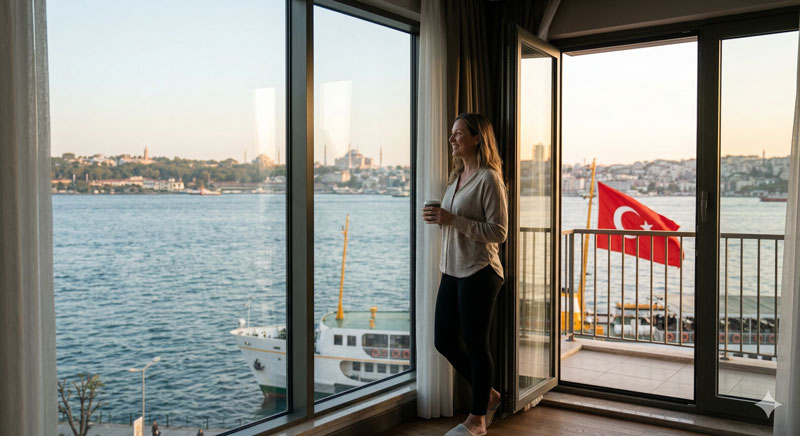
- The Atmosphere: Recovering in a 5-star hotel overlooking the Bosphorus is a world away from the stress of a typical surgical recovery at home. The city’s walkable districts and high-end hospitality allow you to turn a medical necessity into a period of rejuvenation.
- Logistical Ease: Our clinic handles the “friction” of travel. From VIP airport transfers to dedicated patient coordinators who speak fluent English, the goal is to ensure your only focus is your recovery.
Assessing Your Suitability
Not every patient is a candidate for the 7-day protocol. If you have severe Periodontal Disease or uncontrolled diabetes, your treatment may require a more staggered approach.
If you are unsure where you stand with your current Canada’s dental treatment plan, we recommend a virtual evaluation. Our team can review your history and provide a clear roadmap. You can connect with us directly via WhatsApp to start the process.
Who is a Candidate? The 2026 Medical Screening Protocol
While the efficiency of Dental Treatment in Turkey is a major draw, not every patient is immediately ready for a 7-day transformation. In 2026, the screening process has become more rigorous to ensure long-term success. Unlike some high-volume “clinics” that accept every patient, a reputable center like Estesie Dental follows a strict suitability matrix.
The Ideal Candidate for Full-Arch Implants
You are typically a strong candidate for All-on-4 or All-on-6 if:
- You have failing or missing teeth: Patients with advanced periodontal disease or multiple missing teeth benefit most from the stability of full-arch restorations.
- You have “borderline” bone volume: Because the posterior implants in an All-on-4 system are angled at 30 to 45 degrees, we can often utilize the existing bone in the front of the jaw, bypassing the need for extensive (and time-consuming) bone grafts in the sinus area.
- You are in good systemic health: Your body’s ability to heal is paramount. We look for stable blood sugar levels and a healthy immune system.
When You Might Not Be Ready (Contraindications)
Some conditions require a “staged” approach rather than the 7-day rapid protocol:
- Uncontrolled Diabetes: High blood sugar significantly increases the risk of peri-implantitis (infection around the implant). We require a stable HbA1c reading before proceeding.
- Active Gum Disease: You cannot build a house on a swamp. Any active infection must be treated first. This might extend your 7-day trip into a two-stage process.
- Heavy Smoking: As discussed previously, smoking constricts blood flow. While not an absolute disqualifier, it does move a patient into a higher-risk category for implant failure.
- Bisphosphonate Medications: Patients taking certain bone-density medications for osteoporosis may be at risk for Osteonecrosis of the jaw and require specialized surgical techniques.
Technical Deep Dive: The All-on-4 and All-on-6 Protocol
For Canadians frustrated by the slow pace of Canada’s dental treatment, understanding the “how” of Turkish efficiency is enlightening. The All-on-X protocol is a masterpiece of biomechanical engineering.
The 4-S Precision Protocol
In 2026, we utilize the “4-S” framework for full-arch restorations:
- Scanning (3D Nerve Mapping): We use CBCT technology to map your mandibular nerve and maxillary sinuses in three dimensions. This ensures the implants are placed in “safe zones” with zero risk of nerve damage.
- Siting (Guided Drilling): A 3D-printed surgical guide is placed over your gums. This guide has precise holes that dictate the exact depth, angle, and position of each implant, eliminating the “freehand” errors of traditional surgery.
- Stabilization (Primary Torque): For an implant to be “immediately loaded” (getting teeth on the same day), it must achieve a primary stability torque of 35 to 45 Ncm. If this mechanical lock is achieved, the patient can receive their temporary fixed bridge immediately.
- Symmetry (Bite Balancing): Using digital sensors, we ensure that the biting force is distributed equally across all four or six implants. An unbalanced bite is the leading cause of prosthetic fracture.
Why Choose All-on-6 Over All-on-4?
While Dental Implant Prices in Turkey for All-on-4 are enticingly low (averaging $3,500 – $6,500 USD per arch in 2026), many specialists recommend the All-on-6 for the upper jaw. The upper jawbone is naturally softer and more porous than the lower jaw. Adding two extra implants provides a “safety net”—if one implant fails to integrate, the remaining five can still support the bridge, preventing the need for a total redo of the surgery.
Digital Smile Design (DSD): The “Emotional Dentistry” Revolution
In 2026, the most successful clinics in Turkey have moved beyond “fixing teeth” and into “designing smiles.” This is achieved through Digital Smile Design (DSD)—a protocol that combines dentistry with facial aesthetics.
The DSD Process: More Than Just a Mockup
DSD is not just a 3D image on a screen; it is a collaborative experience.
- Facial Analysis: We record high-definition videos of you speaking, laughing, and smiling. This allows us to see how your lips move and how much of your teeth are visible during natural conversation.
- Golden Proportion: We use algorithms based on the Golden Ratio to determine the ideal length and width of your new teeth relative to your facial features.
- The “Test Drive”: Before any permanent work is done, we 3D print a “mockup” that clips over your natural teeth. You can wear this for an hour, take photos, and even show your family. This “emotional connection” ensures that you are 100% confident in the final outcome.
For Canadians who have spent years hiding their smile behind their hand, the DSD process at clinics like Estesie Dental is often the most profound part of their journey.
2026 Waitlist Realities: A Provincial Breakdown
To provide “Commercially Intelligent” context, we have analyzed the 2026 waitlist data for major Canadian hubs. Despite the growth of the Canadian Dental Care Plan (CDCP), the “Specialist Gap” remains a significant hurdle.
Ontario (Toronto & The GTA)
As of April 2026, Ontario accounts for nearly 40% of all CDCP participants. The concentration of patients in the Greater Toronto Area has led to:
- Consultation Wait Times: Average of 12 to 18 weeks for a board-certified prosthodontist.
- Surgery Backlog: Up to 6 months for complex full-mouth reconstructions.
- The “Balance Billing” Issue: Many high-end Toronto clinics do not accept CDCP rates as “full payment,” meaning patients still face thousands of dollars in out-of-pocket costs.
British Columbia (Vancouver & Victoria)
In BC, the shortage of dental assistants and lab technicians has slowed down the production of crowns and bridges.
- Lab Turnaround: 3 to 5 weeks is the current standard for a high-quality Zirconia bridge.
- Waitlist Length: Some community-based clinics report a 1-year waitlist for basic restorative services, forcing patients into the expensive private sector.
Quebec (Montreal & Quebec City)
Quebec has seen the highest volume of “dental tourism” inquiries within Canada. The combination of high private costs and a rigid public system has made Dental Treatment in Turkey a popular topic in Montreal-based health forums.
Comparative Pricing: The 2026 Value Proposition
When you look at the Dental Implant Prices in Turkey, you are seeing the result of a highly optimized ecosystem. In Canada, a single implant is a multi-step financial burden. In Turkey, it is a streamlined service.
| Procedure | Canada (2026 Avg CAD) | Turkey (2026 Avg USD) | % Savings |
| Single Zirconia Crown | $1,500 – $2,800 | $150 – $350 | ~80% |
| Root Canal (Molar) | $1,200 – $2,000 | $100 – $250 | ~85% |
| Full Smile Makeover (20 Units) | $30,000 – $55,000 | $3,500 – $7,500 | ~75% |
| Sinus Lift (Unilateral) | $2,500 – $4,500 | $400 – $800 | ~82% |
For a live update on these rates and current seasonal promotions, please visit our prices page.
Managing Your Journey: The Role of the Medical Coordinator
One of the biggest differences between seeking care at home and seeking Dental Treatment in Turkey is the level of personalized coordination. In Canada, you are often responsible for your own referrals, scheduling, and follow-ups.
In Istanbul, a dedicated Medical Coordinator acts as your “concierge” for the entire week.
- Pre-arrival: They facilitate your virtual consultation and review your Canadian X-rays.
- Logistics: They coordinate your VIP transfers from IST airport to your hotel and the clinic.
- Translation: While our surgeons speak fluent English, the coordinator ensures that every nuance of your treatment plan is understood.
- Aftercare: They remain your point of contact for the 12 months following your surgery, assisting with any questions you or your local Canadian dentist might have.
If you are ready to stop being “just another number” on a Canadian waitlist and want to experience the “Patient-First” model of 2026 Turkish dentistry, start a conversation with us today. We can provide a comprehensive cost comparison and a preliminary DSD assessment within 24 hours.
Safeguarding Your Investment: Dental Tourism Insurance in 2026
One of the most frequent questions from our Canadian patients concerns the “what if” scenarios. While the success rates for Dental Treatment in Turkey at elite clinics exceed 98%, the 2026 traveler is more risk-aware than ever. Standard travel insurance rarely covers elective medical procedures, which is why specialized Dental Tourism Insurance has become a staple for international patients.
Why Traditional Insurance Falls Short
Most Canadian travel insurance policies (like those from CAA or Blue Cross) are designed for emergency medical evacuations or sudden illnesses. They explicitly exclude “planned medical procedures.” If you travel to Istanbul for dental implants and experience a minor complication, a standard policy will not cover the cost of corrective care or extended stays.
Specialized 2026 Providers
In 2026, several international insurers offer “Complications Coverage” specifically for dental tourists. These policies typically cover:
- Corrective Treatment: If a restoration fails within the first 12 months, the insurance covers the cost of returning to Turkey or receiving stabilization care in Canada.
- Travel and Accommodation: Coverage for additional flights and hotel stays if your treatment takes longer than the planned 7 days due to clinical necessity.
- Legal Protection: Access to mediation services in the rare event of a clinical dispute.
By investing a small premium (usually $200–$400 CAD), Canadian patients can enjoy the significant savings of Dental Implant Prices in Turkey with the same peace of mind they would have at a local clinic.
Turkey vs. The World: A Global Comparison (2026)
While Canadians are the focus of this guide, it is helpful to understand Turkey’s position in the global dental hierarchy. In 2026, the primary competitors for “Dental Excellence” are Mexico (for North Americans), Thailand (for Australians), and Hungary (for Europeans).
Turkey vs. Mexico (Los Algodones)
For many Canadians, Mexico has been a traditional choice. However, in 2026, the shift toward Turkey is driven by technology.
- Infrastructure: While Mexico offers proximity, Turkey has invested more heavily in in-house CAD/CAM labs and university-affiliated research.
- Specialization: Istanbul hosts a higher density of PhD-level prosthodontists per square kilometer than almost any other city in the world.
- The Experience: Istanbul offers a world-class tourism infrastructure that many find more diverse and historically rich than the border towns of Mexico.
Turkey vs. Hungary
Hungary was the original “Dental Hub” of Europe. In 2026, Turkey has surpassed Hungary in terms of “High-Tech Integration.”
- Efficiency: Turkish clinics are more aggressive in adopting AI-driven workflows, which is what allows for the reliable “7-day” turnaround that Hungarian clinics often struggle to match.
- Cost: Despite the high technology, Dental Implant Prices in Turkey remain approximately 20-30% lower than in Budapest due to lower domestic overheads.
Advanced Healing: The Role of PRF and Laser Dentistry
To achieve a full mouth restoration in under 7 days, we cannot rely on “standard” healing times. In 2026, we utilize biological accelerators to ensure your gums and bone respond immediately to the treatment.
PRF (Platelet-Rich Fibrin) Technology
PRF is a second-generation concentrate of your own blood.
- The Process: Before your surgery, we draw a small amount of your blood and spin it in a centrifuge.
- The Result: We create a “fibrin clot” rich in growth factors and white blood cells.
- The Application: We place this PRF directly into the implant site or bone graft.
- The Benefit for Canadians: PRF significantly reduces post-operative swelling and pain. More importantly, it accelerates the initial stages of bone healing, making the “7-day” protocol safer and more predictable.
Laser-Assisted Periodontics
In 2026, the “scalpel and sutures” approach is increasingly being replaced by Dental Lasers.
- Biolase Technology: We use WaterLase systems to perform gum contouring and pocket disinfection.
- Zero Bleeding: Lasers cauterize the tissue as they cut, meaning there is virtually no bleeding and a significantly reduced risk of infection. For a patient who needs to fly back to Canada in 48 hours, this “bloodless” surgery is a major clinical advantage.
Why Choose Estesie Dental? The 2026 Canadian Choice
In a city with thousands of dentists, why do Canadians specifically choose Estesie Dental? It comes down to a blend of “Western Standards” and “Turkish Hospitality.”
1. Board-Certified Expertise
Our lead surgeons are not just “general dentists.” They are specialists with over 15 years of experience in Oral Surgery and Prosthodontics. In 2026, we maintain a “one patient, one specialist” policy, ensuring that the doctor who designs your smile is the one who places the final crowns.
2. High-Density Technology
We don’t outsource. Our clinic houses:
- Two Class-B Autoclave Sterilization units.
- A dedicated CAD/CAM milling center.
- The latest Sirona Orthophos SL 3D Imaging system. This vertical integration is why we can offer Dental Treatment in Turkey with such high precision in such a short window.
3. The “Estesie” Guarantee
We provide a transparent, written guarantee for every procedure.
- Implants: Lifetime guarantee on the titanium fixture.
- Crowns/Veneers: 5-year comprehensive guarantee against chipping or breakage.
- Documentation: Every patient receives a “Passport” containing the brand, lot number, and serial number of every material used in their mouth.
Commercial Intelligence: The “Value” Trap
As an expert medical content strategist, I must warn you about the “Ultra-Low” price trap. In 2026, if a clinic offers Dental Implant Prices in Turkey that are 50% lower than the average (e.g., an implant for $200 USD), you must ask where they are cutting corners.
- Sterilization: Are they using single-use drills or cheap, multi-use ones that have lost their sharpness?
- Abutments: Are they using “clone” abutments that don’t fit perfectly into the implant, leading to bacterial leakage?
- Labor: Is the lab work being done by a master technician or a junior apprentice?
At Estesie Dental, our pricing is “Optimized,” not “Cheap.” We use the highest-grade materials and the most experienced staff, while still remaining 70% more affordable than Canada’s dental treatment options. You can view our transparent 2026 price list here.
The Psychological Shift: From Anxiety to Empowerment
The most significant barrier for most Canadians is not the flight or the cost—it is the fear of the unknown. We understand that dental anxiety is real, especially when combined with international travel. Our “7-Day Transformation” is designed to be as much about comfort as it is about clinical results.
If you are tired of the waitlists and the mounting costs of Canada’s dental treatment, the path forward is simple. You don’t need a formal referral. You just need a desire for a better quality of life. Contact us on WhatsApp to receive a free, no-obligation medical review of your case.
Frequently Asked Questions (FAQ)
To provide the most thorough resource possible, we have compiled the most critical questions asked by Canadians considering Canada’s dental treatment alternatives in April 2026.
1. How can Turkey offer such low prices compared to Canada in 2026?
The price difference is driven by lower clinical overheads, government subsidies for medical tourism, and a favorable exchange rate for the Canadian Dollar. Additionally, the high volume of international patients allows Turkish clinics to purchase premium materials (like Straumann implants) in bulk, receiving discounts that small Canadian clinics cannot access. You can see the result of this efficiency on our prices page.
2. Is the “7-Day” timeline safe for dental implants?
Yes, provided the patient is a candidate for “Immediate Loading” or “Same-Day Teeth.” By using 3D surgical guides and high-stability implants, we can place the fixture and the temporary bridge in one session. However, the final permanent bridge is often fitted 3-6 months later during a second short trip to ensure the bone has fully fused.
3. Will my Canadian dentist refuse to see me if I get work done in Turkey?
While some dentists may be hesitant, most professionals in 2026 recognize the reality of global medical travel. We provide all patients with a “Clinical Digital Passport” containing the 3D scans, material serial numbers, and surgical reports. This documentation makes it easy for any Canadian dentist to provide routine cleanings and maintenance.
4. What happens if a crown chips once I am back in Canada?
Under our 2026 guarantee, we cover the replacement of any faulty restoration. If a crown chips due to a material defect, we will manufacture a new one and ship it to a local partner or cover the costs for you to return for a quick 48-hour fix.
5. Can I claim my Turkish dental expenses on my Canadian taxes?
Yes. Under the Medical Expense Tax Credit (METC), the CRA generally allows you to claim eligible dental procedures performed by licensed practitioners abroad. Ensure you keep your official invoices and payment receipts from Estesie Dental.
6. Are Turkish dentists as qualified as Canadian dentists?
Turkish dental education is rigorous, often requiring 5 years of dental school followed by 4-6 years of specialized residency for surgeons and prosthodontists. Many of our lead specialists have also completed fellowships in Europe or the United States and are members of the International Team for Implantology (ITI).
7. Does the 2026 CDCP cover my travel to Turkey?
No, the CDCP only provides subsidies for treatments performed by participating providers within Canada. However, because the Dental Implant Prices in Turkey are so significantly lower, most patients find that their total out-of-pocket cost is still 50-70% less than their “co-pay” would be under the CDCP in Canada.
8. What is the best material for a Hollywood Smile in 2026?
For the most natural aesthetic, we recommend IPS E-max for the front teeth due to its high translucency. For patients who grind their teeth or need full-mouth bridges, Multi-layered Zirconia is the preferred choice for its “ceramic steel” strength.
9. How do I start the process from Canada?
The process begins with a “Virtual Consultation.” You don’t need to travel to Istanbul just for a quote. By sending a clear photo or a recent panoramic X-ray via WhatsApp, our specialists can provide a preliminary plan. Click here to start your consultation.
10. Is the water in Turkey safe for dental procedures?
Reputable clinics in 2026 use independent, closed-circuit distilled water systems for all dental units. This eliminates any risk of contamination and ensures a sterile environment for surgery.
Conclusion: Reclaiming Your Smile in 2026
The dental landscape of April 2026 presents a clear choice for Canadians. You can remain on a waitlist, navigating the complexities of the CDCP and the rising private costs of Canada’s dental treatment, or you can leverage the globalized efficiency of Dental Treatment in Turkey.
The “7-Day” model is not a shortcut; it is the culmination of decades of technological advancement and logistical optimization. By choosing a clinic like Estesie Dental, you are choosing a system where your time is respected, your health is prioritized, and your financial investment is protected by international standards.
Whether you require a single implant, a full-arch restoration, or a cosmetic smile design, the technology exists to restore your confidence in less time than it takes for a typical Canadian referral to be processed. As we move further into 2026, the border between “local” and “global” healthcare continues to fade, leaving only one priority: your right to a healthy, functional, and beautiful smile.
Final Call to Action
Don’t let another month pass on a waitlist. Your journey toward a reliable, high-quality dental transformation starts with a single message. Our specialized team at Estesie Dental is ready to provide you with a detailed, transparent, and medically responsible treatment plan tailored specifically for the Canadian patient.
- Step 1: Contact us via WhatsApp for an immediate preliminary review.
- Step 2: Send us your dental photos or X-rays for an AI-assisted diagnostic report.
- Step 3: Receive your “All-Inclusive” quote, including the latest 2026 Dental Implant Prices in Turkey.
- Step 4: Arrange your VIP travel and accommodation for a seamless 7-day stay in Istanbul.
Your smile doesn’t have to wait. Reclaim it today.