



Skip the UK NHS Dentist Waitlist and Get Full-Mouth Implants in Just One Week (April 2026)
For millions of residents, the NHS dentist waitlist 2026 has become an insurmountable barrier to basic healthcare, let alone advanced restorative procedures. What was once a temporary backlog has evolved into a systemic crisis, leaving patients with deteriorating oral health, chronic pain, and a loss of confidence. When faced with a timeline of years just to see a practitioner, the idea of obtaining complex treatment like full-mouth implants through the state system feels like a distant dream.
Contents
However, you do not have to remain a victim of the NHS dentist waitlist 2026. Modern dental technology and the globalization of specialized healthcare have opened doors that allow patients to bypass the queue entirely. Imagine trading years of waiting for just seven days of focused, world-class treatment. By shifting the perspective from local limitations to international excellence, patients can now access immediate loading dental implants that provide a functional, beautiful, and permanent smile in a fraction of the time. This article explores the reality of the UK dental crisis and provides a comprehensive roadmap for those ready to take their health into their own hands, moving from the frustration of a waitlist to the reality of a restored life.
The Current State of the NHS Dentist Waitlist 2026
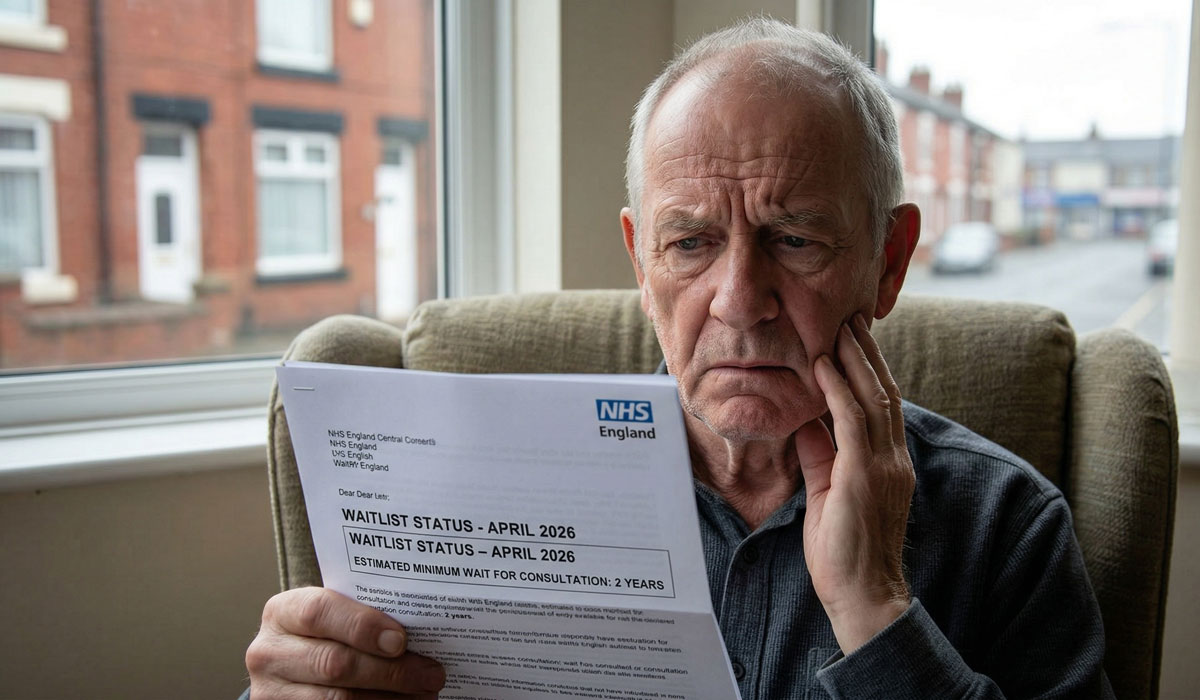
To understand why so many people are looking for alternatives, we must first look at the sobering reality of the NHS dentist waitlist 2026. Despite various government initiatives and “recovery plans” introduced in the mid-2020s, the gap between patient demand and provider capacity has only widened. As of April 2026, the queue for a routine check-up in many parts of the country stretches beyond 24 months, while those requiring complex restorative work, such as bridges or dentures, are often told that the NHS dentist waitlist 2026 for these specific services is essentially closed to new entries.
Why Dental Access in the UK Has Hit a Breaking Point
The root of the problem is multifaceted. Primarily, the Unit of Dental Activity (UDA) contract system, which governs how NHS dentists are paid, has long been criticized for making high-quality, time-intensive work financially unviable for practices. By 2026, a significant percentage of dental professionals have transitioned fully to private practice or reduced their NHS commitments to the bare minimum.
Furthermore, the “Great Retirement” of senior clinicians, combined with a slowdown in the recruitment of overseas dentists post-regulatory changes, has created a workforce vacuum. When you search for the NHS dentist waitlist 2026 in your local area, you aren’t just looking at a list of names; you are looking at a system that is mathematically unable to serve the population it was designed for. This has forced many to seek an emergency private dentist just to handle basic infections, often at a cost that makes the eventual leap to full-mouth implants a more logical long-term investment.
The Statistics Behind the NHS Dentist Waitlist 2026
Recent data from the first quarter of 2026 suggests that over 12 million people in England and Wales are currently unable to access an NHS dentist. In some “hotspots,” such as the South West and parts of East Anglia, the NHS dentist waitlist 2026 has become so legendary that patients have resorted to “DIY dentistry”—a tragic trend that has seen a 15% increase in hospital admissions for dental-related sepsis since 2024.
The wait times for specific procedures are even more alarming:
- Routine Examination: 18–24 months
- Root Canal Treatment: 12–18 months
- Complex Restorations (Crowns/Bridges): 2+ years
- Specialist Consultations: Often unavailable in many Integrated Care Boards (ICBs)
For a patient suffering from failing teeth or uncomfortable dentures, the NHS dentist waitlist 2026 is not just a delay; it is a sentence to years of discomfort and declining systemic health.
Regional Disparities: “Dental Deserts” in April 2026
The term “Dental Desert” was coined years ago, but in 2026, it is a lived reality for millions. The NHS dentist waitlist 2026 is not evenly distributed. While urban centers like London or Manchester may have slightly more movement due to a higher concentration of practices, rural and coastal communities have seen a total collapse of state-funded oral care.
In these regions, the NHS dentist waitlist 2026 effectively functions as a “legacy list,” where only those who have been with a practice for decades remain on the books. New residents or young adults have virtually zero chance of securing a spot. This geographic inequality has driven a surge in interest for fast dental implants UK and abroad, as patients realize that traveling a few hours—or even a few hours by plane—is more efficient than waiting years for a local appointment that may never materialize.
Understanding the Impact of the NHS Dentist Waitlist 2026 on Oral Health
The consequences of being stuck on the NHS dentist waitlist 2026 extend far beyond the inconvenience of a missed cleaning. Oral health is a progressive metric; it rarely stays static. When a patient is denied access to preventative care or early intervention, minor issues inevitably snowball into catastrophic failures. For many in the UK today, the “wait” is not a passive period of time—it is a period of active deterioration.
From Routine Fillings to Emergency Extractions
In a functioning dental system, a small cavity is detected during a biannual check-up and addressed with a simple composite filling. However, under the current pressure of the NHS dentist waitlist 2026, that same patient may wait eighteen months for an initial assessment. By the time they are seen, the decay has often bypassed the enamel and dentin, reaching the pulp of the tooth.
What could have been a thirty-minute procedure now requires a complex root canal or, more likely given the time constraints of NHS contracts, a total extraction. We are seeing a generation of patients who are losing teeth that could have been saved if the NHS dentist waitlist 2026 weren’t so prohibitively long. This cycle of “neglect-then-extract” is driving the surge in demand for full-mouth restorations, as patients find themselves with multiple missing teeth and a collapsing bite.
The Psychological Toll of Long-Term Dental Neglect
The impact of the NHS dentist waitlist 2026 is not merely physical. There is a profound psychological weight associated with visible dental decay and missing teeth. In professional environments, social gatherings, and even within families, individuals suffering from poor oral health often experience a “social death.” They stop smiling, cover their mouths when they speak, and avoid certain foods, which in turn affects their nutritional intake and overall vitality.
Chronic dental pain, often managed poorly with over-the-counter analgesics while waiting for an appointment, can lead to sleep deprivation, anxiety, and depression. When a patient realizes they may be on the NHS dentist waitlist 2026 for several more years, the sense of hopelessness can be overwhelming. This is why the promise of a “one-week” solution is not just about aesthetics; it is about reclaiming one’s dignity and mental well-being.
Why “Wait and See” is No Longer a Viable Strategy
For many years, the British public has been conditioned to “wait and see” when it comes to NHS services. However, in April 2026, this strategy is proving dangerous. The biological reality of the human jaw is that it requires the stimulation of tooth roots to maintain its density. When teeth are lost and not replaced, the underlying bone begins to resorb or “melt away.”
The Risk of Bone Loss and Secondary Health Complications
If you remain on the NHS dentist waitlist 2026 while missing multiple teeth, you are actively losing the foundation required for future dental implants. Significant alveolar bone loss can occur within just six to twelve months of an extraction. If you wait three years for a state-funded solution that may never come, you might find that you no longer have enough bone to support standard implants, necessitating expensive and invasive bone grafting procedures later on.
Furthermore, periodontal disease—often left untreated due to the NHS dentist waitlist 2026—has been linked by various medical studies to systemic issues, including cardiovascular disease, type 2 diabetes, and even Alzheimer’s. Taking proactive steps today is not an act of vanity; it is a critical health intervention.
When an Emergency Private Dentist is Your Only Choice
Many patients currently on the NHS dentist waitlist 2026 only interact with a professional when the pain becomes unbearable. At this stage, they are forced to seek an emergency private dentist. While these emergency services are vital for pain relief and infection control, they are often “patchwork” solutions.
An emergency private dentist can pull a tooth or prescribe antibiotics, but they rarely have the scope within an emergency appointment to create a comprehensive restorative plan. This leaves the patient in a cycle of paying private emergency fees for a shrinking number of teeth, without ever achieving a functional smile. This realization is what often leads patients to consider fast dental implants UK or international specialized clinics that can offer a permanent, full-mouth solution in a single coordinated week.
The One-Week Solution: Immediate Loading Full-Mouth Implants
The concept of getting a brand-new set of teeth in a week might sound like science fiction to someone who has been staring at the NHS dentist waitlist 2026 for two years. However, advancements in implantology and digital dentistry have made this a standard of care in high-end clinics. This approach is often referred to as “Immediate Loading” or “Teeth in a Day/Week.”

What are “All-on-4” and “All-on-6” Implant Systems?
The cornerstone of modern full-mouth restoration is the All-on-4 (or All-on-6) technique. Instead of replacing every single tooth with an individual implant—which would be prohibitively expensive and require massive bone density—surgeons place four to six strategically angled titanium or zirconia posts into the jawbone.
These posts act as anchors for a full fixed bridge (a “prosthesis”) that replaces an entire arch of teeth. Because the implants are tilted, they can often utilize the existing bone more effectively, frequently removing the need for bone grafts. This is a game-changer for those who have suffered bone degradation while stuck on the NHS dentist waitlist 2026.
The Science of Immediate Loading: How Can it be Done in a Week?
Traditionally, dental implants required a “healing period” of three to six months where the post was buried under the gum to fuse with the bone (osseointegration) before a tooth was attached. In 2026, we utilize the principle of “primary stability.” If the implant is placed with enough torque and the individual implants are “splinted” together by a rigid bridge, they can handle the forces of chewing almost immediately.
This allows the clinical team to move from extraction and implant placement to the final (or high-quality temporary) bridge within days. While the NHS dentist waitlist 2026 keeps you in a holding pattern, this technology moves you from “no teeth” to “full function” in 168 hours.
Fast Dental Implants UK: Expectations vs. Reality
When searching for fast dental implants UK, many patients find that while the technology exists domestically, the cost and the logistical bottlenecks remain high. Many UK private practices still outsource their lab work to external dental laboratories, which can add weeks to the process.
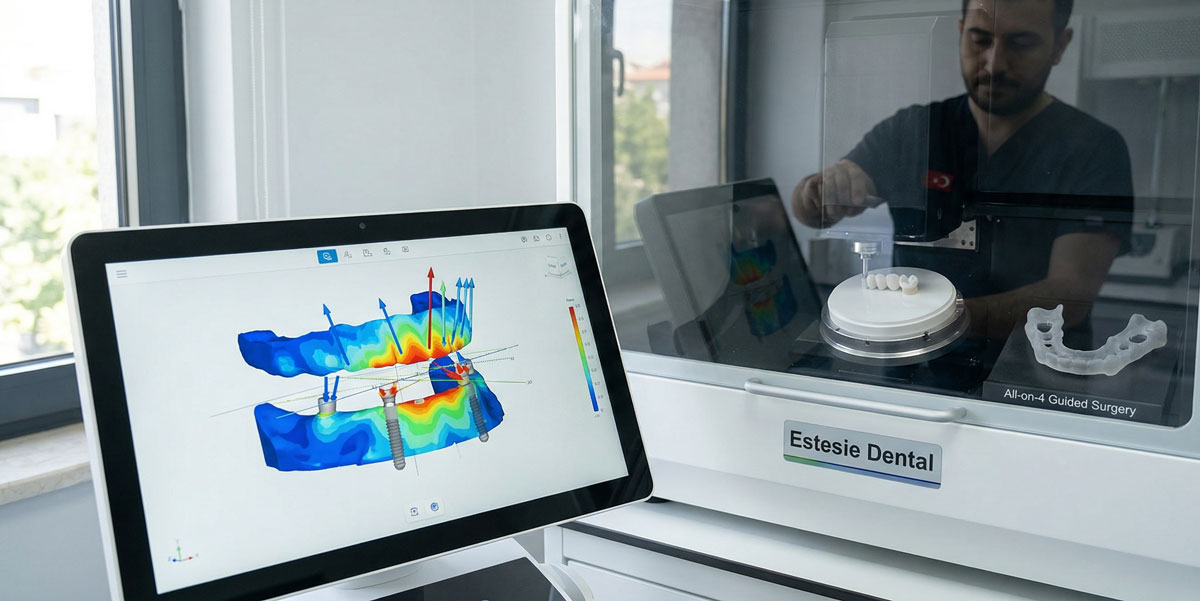
To truly achieve a “one-week” turnaround, a clinic must have an in-house digital laboratory, on-site CT scanning, and a dedicated surgical team working in tandem. This level of integration is what allows patients to bypass the traditional delays associated with both the NHS dentist waitlist 2026 and standard private practices that lack integrated facilities.
The Step-by-Step Journey to a New Smile in 7 Days
If you decide to leave the uncertainty of the NHS dentist waitlist 2026 behind, what does the actual week look like? A full-mouth restoration is a highly choreographed medical event.
Day 1: Advanced 3D Imaging and Consultations
The journey begins with a deep dive into your oral anatomy. Unlike the hurried five-minute check-ups often found at the end of a long NHS dentist waitlist 2026 queue, this consultation involves:
- CBCT Scans: 3D imaging to map bone density and nerve pathways.
- Intraoral Scanning: Digital impressions that replace the messy “putty” of the past.
- Smile Design: Using AI and digital software to show you what your new teeth will look like before the first incision is made.
Day 2-3: Surgical Precision and Implant Placement
The surgical phase is usually performed under local anesthesia with sedation or general anesthesia for maximum comfort. Any remaining failing teeth (which are common in patients who have been on the NHS dentist waitlist 2026) are removed. The implants are then placed with guided surgery, ensuring they are in the exact position dictated by the digital plan.
Day 4-6: Custom Prosthetic Fabrication
While you rest and allow the initial swelling to subside, the in-house lab is at work. Using CAD/CAM technology, they mill your new teeth from high-grade materials like Zirconia or PMMA. This is the stage where the artistry happens—matching the shade, shape, and translucency to create a look that is natural and age-appropriate.
Day 7: Final Fitting and Your New Life Begins
On the final day, the bridge is securely screwed onto the implants. The bite is checked for perfection, and you walk out of the clinic with a fully functional set of teeth. Compared to the years of waiting and the potential for “denture dissatisfaction” on the NHS dentist waitlist 2026, the efficiency of this week is transformative. You can check the current investment required for such life-changing procedures on our prices page to see how it compares to the lifelong cost of temporary fixes.
Comparing the Costs: NHS Limitations vs. Private Excellence
When evaluating the NHS dentist waitlist 2026, the conversation inevitably turns to finances. For decades, the British public has relied on the affordability of the NHS tiered pricing system. However, in April 2026, the “cost” of the NHS is no longer just the fee on the treatment plan; it is the compounding expense of systemic failure. To make an informed decision, one must look past the initial sticker price and analyze the total cost of ownership for one’s oral health.
The Hidden Costs of Waiting on the NHS Dentist Waitlist 2026
At first glance, an NHS Band 3 treatment—which covers complex procedures like crowns or dentures—seems like a bargain at a few hundred pounds. But what is the real cost when you are placed on an NHS dentist waitlist 2026 for two years?
- Emergency Interventions: While waiting for a permanent solution, many patients suffer from recurring infections or abscesses. This leads to multiple visits to an emergency private dentist, where consultation fees, X-rays, and temporary fillings can quickly reach four figures without ever solving the underlying problem.
- Loss of Productivity: Chronic dental pain is a leading cause of work absenteeism in the UK. The time spent managing pain, attending emergency appointments, and the mental fog caused by dental distress has a direct impact on one’s career and earning potential.
- Nutritional Decline: Patients with failing teeth or poorly fitting dentures often shift to a soft-food diet, which is typically higher in processed carbohydrates and lower in essential nutrients. The long-term medical costs of managing the resulting systemic health issues—such as digestive problems or vitamin deficiencies—are rarely factored into the “savings” of waiting for the NHS.
- Bone Grafting Requirements: As mentioned previously, bone resorption is a silent consequence of the NHS dentist waitlist 2026. If you wait three years to get an implant, you may find that you now require a sinus lift or a block bone graft—procedures that can add £2,000 to £4,000 to a private treatment plan.
Investment in Longevity: Why Implants are More Cost-Effective Than Dentures
A common pitfall for those on the NHS dentist waitlist 2026 is settling for a removable partial or full denture. While dentures are the standard NHS offering for missing teeth, they are rarely a “one-and-done” solution. Dentures require relining every few years as the jawbone changes shape, and they typically need total replacement every five to seven years.
In contrast, a high-quality full-mouth implant system is designed to last a lifetime with proper maintenance. When you look at the prices for these advanced treatments, you aren’t just paying for teeth; you are paying for the preservation of your facial structure and the elimination of future dental bills. By opting for fast dental implants UK alternatives now, you are essentially “pre-paying” for decades of oral stability.
Breakdown of Global Pricing Models
The cost of full-mouth restoration varies significantly based on several critical factors. Understanding these variables helps patients distinguish between “cheap” dentistry and “high-value” clinical excellence.
- Implant Material: Titanium is the gold standard for its biocompatibility, but premium Zirconia implants are increasingly popular for patients with metal sensitivities or those seeking the highest aesthetic standards.
- The Prosthesis Material: This is where many “budget” clinics cut corners. A temporary acrylic bridge is often included in the base price, but a long-term, high-strength Prettau® Zirconia bridge offers superior durability and stain resistance.
- Technology Integration: The use of CBCT (Cone Beam Computed Tomography), 3D facial scanning, and robotic-assisted drilling increases the initial cost but drastically reduces the risk of failure.
- Clinical Expertise: A surgeon who performs 500 full-mouth reconstructions a year has a different success rate and “aesthetic eye” than a generalist who places ten implants a year.
By comparing the comprehensive packages offered at specialized centers like Estesie Dental with the fragmented costs of UK private care, the value proposition becomes clear. You can view a detailed breakdown of these variables and how they impact the final investment on our prices page.
Why International Patients Choose Specialized Centers Over Local UK Clinics
As the NHS dentist waitlist 2026 continues to lengthen, a significant trend has emerged: “Dental Migration.” Patients are no longer limiting their search for healthcare to their local high street. Instead, they are seeking out global hubs of excellence where the density of expertise and technology far exceeds what is available in the average UK private practice.
Technological Superiority in Modern Dental Hubs
While many UK practices are still transitioning to digital workflows, leading international clinics have been “Digital-First” for years. When you step out of the NHS dentist waitlist 2026 bubble and into a world-class facility, you encounter:
- In-House CAD/CAM Laboratories: This is the secret to the “One Week” promise. When the technicians sit ten meters away from the surgeons, adjustments can be made in real-time. There is no waiting for a courier to deliver a bridge from a third-party lab.
- Photogrammetry: This advanced technology allows for the precise digital mapping of implant positions in the mouth, ensuring that the bridge fits with micron-level accuracy. This level of precision is rarely available to patients stuck in the standard UK system.
- Advanced Sedation Suites: For many on the NHS dentist waitlist 2026, dental anxiety is a major hurdle. Specialized centers offer comprehensive sedation options, from IV conscious sedation to full general anesthesia, monitored by dedicated anesthesiologists.
Concierge Dental Care: The Patient Experience
One of the most stark differences between waiting for an appointment on the NHS dentist waitlist 2026 and visiting a specialized private center is the level of service. In the NHS, the patient is often treated as a “number” in a struggling system. In a dedicated implant center, the experience is more akin to high-end hospitality.
For patients traveling from the UK, this often includes:
- Airport transfers and luxury accommodation.
- Dedicated patient coordinators who speak fluent English.
- Transparent, all-inclusive pricing with no hidden “add-ons.”
- A timeline that respects the patient’s schedule, not the clinic’s backlog.
This holistic approach is why many people find that even with the cost of a flight, the total experience is more restorative—physically and emotionally—than the uphill battle of finding an emergency private dentist at home.
Clinical Excellence at Estesie Dental
At Estesie Dental, we understand that the decision to bypass the NHS dentist waitlist 2026 and seek full-mouth restoration is a significant life event. Our clinic is designed specifically to address the needs of patients who require high-complexity work in a compressed timeframe.
We don’t just “fit” implants; we engineer smiles. Our team utilizes a multidisciplinary approach where prosthodontists, oral surgeons, and lab technicians collaborate from the very first consultation. We recognize that every day you spend on the NHS dentist waitlist 2026 is a day spent in discomfort, which is why we have optimized our protocols to deliver world-class results in just seven days.
Whether you are dealing with the aftermath of periodontitis, failing bridge work, or the frustration of a collapsing bite, we provide a sanctuary of expertise. If you are currently struggling with dental pain or are dissatisfied with the answers you are getting from the UK system, we invite you to reach out for a direct, professional conversation.
Urgent Consultation Note: For those currently facing an acute crisis or who simply want a second opinion on their current treatment plan, you can contact our specialists directly via WhatsApp. We offer video consultations to review your case and provide an initial assessment without you needing to leave your home.
Is Everyone a Candidate for Full-Mouth Implants in One Week?
While the technology is transformative, it is essential to maintain medical responsibility. Not every patient is immediately ready for “Immediate Loading” implants, especially after years of being neglected on the NHS dentist waitlist 2026.
Assessing Bone Density and Systemic Health
The success of a one-week restoration depends on “Primary Stability.” This means the bone must be strong enough to hold the implant firmly from day one. During your initial evaluation, our specialists look for:
- Sufficient Bone Volume: If the bone has resorbed too far during your time on the NHS dentist waitlist 2026, we may need to employ specialized implants like Zygomatic implants (which anchor into the cheekbone) or perform localized grafting.
- Controlled Systemic Conditions: Patients with uncontrolled diabetes or those who are heavy smokers may have a higher risk of implant failure. We work with you to optimize your health before proceeding.
- Oral Environment: Any active gum disease must be treated to ensure the implants are placed in a clean, healthy environment.
Solutions for Patients with Significant Bone Loss
For those who have been told by a UK emergency private dentist that they “don’t have enough bone for implants,” there is still hope. Specialized clinics often use advanced techniques that general dentists do not.
Techniques such as “All-on-4” are specifically designed to maximize existing bone by tilting the posterior implants. In more extreme cases of atrophy—often seen in patients who have spent decades on the NHS dentist waitlist 2026 using ill-fitting dentures—we can utilize Zygomatic or Pterygoid implants. These bypass the traditional jawbone entirely, allowing even those with “zero bone” to walk away with a fixed smile in one week.
The Role of AI and Digital Twins in 2026 Dental Implant Planning
As we navigate the complexities of the NHS dentist waitlist 2026, it is important to recognize that the delay in the UK isn’t just about a lack of dentists; it is also about a lack of access to the cutting-edge technology that has redefined dental surgery in the mid-2020s. While the state system struggles with administrative backlogs, private centers of excellence have embraced Artificial Intelligence (AI) to transform the patient experience.
In 2026, the “one-week” restoration is powered by the concept of the Digital Twin. Before any surgery begins, a virtual 3D replica of the patient’s head, jaw, and facial soft tissues is created. This AI-driven model allows surgeons to:
- Simulate Force Distribution: The software calculates exactly how your bite will land on the new implants. By simulating years of chewing in seconds, the AI identifies potential “stress points” that could lead to implant failure, allowing for adjustments before the actual procedure.
- Automated Nerve Mapping: One of the primary risks in implant surgery is damage to the inferior alveolar nerve. AI algorithms in 2026 can now map these pathways with 99.9% accuracy, guiding the surgeon to place implants in the safest possible “corridors” of bone.
- Predictive Aesthetic Outcomes: Using generative design, the AI can suggest tooth shapes that harmonize with your unique facial proportions, age, and even your speech patterns. This removes the “guesswork” often associated with the traditional dentures offered to those who finally reach the end of the NHS dentist waitlist 2026.
This level of precision is why modern full-mouth restorations have success rates exceeding 98%. When you choose to bypass the queue, you aren’t just getting “faster” care; you are getting a level of technological oversight that simply doesn’t exist in the overstretched public sector.
Material Science in 2026: Why Zirconia is the Gold Standard
For patients stuck on the NHS dentist waitlist 2026, the eventual solution offered is often a resin-based denture or a basic porcelain-fused-to-metal (PFM) bridge. While these materials were the standard for decades, 2026 has seen a definitive shift toward Monolithic Zirconia for full-mouth restorations.
Zirconia vs. Traditional Materials
| Feature | NHS-Standard Acrylic/Resin | Private-Standard Zirconia (Ivoclar®) |
| Durability | High risk of chipping or snapping | Virtually indestructible; diamond-like strength |
| Stain Resistance | Absorbs coffee, tea, and tobacco stains | Non-porous; maintains brilliance for years |
| Biocompatibility | Can cause gum irritation/allergic reactions | Highly biocompatible; promotes gum health |
| Aesthetics | Can look “plastic” or unnaturally opaque | High translucency; mimics natural tooth enamel |
| Longevity | Typically requires replacement every 5–7 years | Designed to last a lifetime |
If you are investing in your health to escape the NHS dentist waitlist 2026, the choice of material is the single most important factor in the longevity of your result. Zirconia bridges, milled using precision CAD/CAM technology, offer a level of stability that allows you to eat steak, apples, and nuts without a second thought—a level of function that is often impossible with the standard NHS alternatives.
The Logistics of Your One-Week Transformation: Travel and Aftercare
Choosing to seek treatment outside the UK to avoid the NHS dentist waitlist 2026 requires a bit of planning, but for most, the process is surprisingly seamless. High-end clinics like Estesie Dental have optimized the “Dental Tourism” experience to be as stress-free as possible.
Travel and Arrival: The “Concierge” Experience
When you decide to fast-track your dental care, the logistical burden is largely shifted to the clinic. In 2026, a typical “One-Week Restoration” package includes:
- VIP Chauffeur Services: From the moment you land, you are met by a private driver who handles all transfers between the airport, your hotel, and the clinic.
- Five-Star Accommodation: Recovery is faster in a comfortable environment. Most patients stay in luxury hotels within minutes of the clinic, ensuring that any post-operative questions can be addressed immediately.
- Dedicated Patient Coordinators: You will have a single point of contact who speaks native-level English and is available via WhatsApp throughout your stay.
Post-Operative Care: The First 72 Hours
The “one-week” timeline is meticulously managed. After the surgical placement of the implants (usually on Day 2), the following 72 hours are focused on healing and lab work.
- Cryotherapy and Laser Healing: Modern clinics use cold-laser therapy to reduce swelling and accelerate tissue regeneration, ensuring you are comfortable enough to enjoy a walk around the city by Day 4.
- Dietary Guidance: While your new implants are stable, we recommend a “soft-food” diet for the first few weeks to allow the bone to begin the fusion process. However, unlike a denture-wearer waiting on the NHS dentist waitlist 2026, you will have a fixed set of teeth during this entire period.
Long-Term Maintenance and the UK Connection
A common concern for patients leaving the NHS dentist waitlist 2026 is: “What happens when I get home?”
At Estesie Dental, we provide a comprehensive “Aftercare Passport.” This digital record includes the exact brand, size, and torque settings of every implant used, along with your 3D scans. This ensures that any local emergency private dentist in the UK can assist you with routine cleanings or minor adjustments in the future. We also maintain a network of partner practitioners who understand our protocols, providing you with a global safety net for your new smile.
Beyond the Surgery: The Psychological Renaissance
We often talk about the clinical and financial aspects of the NHS dentist waitlist 2026, but we must not overlook the profound emotional shift that occurs during that one week of treatment. For many of our patients, the years of waiting have led to a “shrunken” life. They have stopped dating, stopped applying for promotions, and stopped laughing freely.
Walking out of the clinic on Day 7 with a full, permanent, and beautiful set of teeth is often described as a “rebirth.” The speed of the transformation—from the despair of a multi-year waitlist to the reality of a new life in seven days—creates a psychological momentum that can improve every aspect of a patient’s life. This is the ultimate “ROI” (Return on Investment) of bypassing the traditional UK system.
The Financial Blueprint: Navigating the Real Costs of Dental Implants
When attempting to escape the NHS dentist waitlist 2026, the most significant hurdle for many is the perceived cost of private care. It is a common misconception that high-quality dental implants are an expense reserved only for the wealthy. In reality, when you break down the variables that contribute to the final price, you see a strategic investment in long-term health and financial stability. Understanding these variables is crucial for anyone looking to bypass the NHS dentist waitlist 2026 with a permanent solution.
What Actually Affects Your Final Treatment Cost?
Several factors influence why a quote from a local emergency private dentist in London might differ vastly from a specialized center like Estesie Dental.
- Diagnostic Precision and Imaging: A high-level clinic uses 3D CBCT scans and intraoral digital mapping. These tools are essential for the “one-week” turnaround because they allow for the pre-fabrication of the bridge. While this adds an upfront cost compared to the basic X-rays found on the NHS dentist waitlist 2026, it drastically reduces the risk of surgical complications.
- Number of Units and Implant Type: Are you receiving four implants (All-on-4) or six (All-on-6)? The number of implants depends on your bone density—something often compromised by long waits on the NHS dentist waitlist 2026. Additionally, premium brands like Straumann or Nobel Biocare carry higher manufacturer costs but offer lifetime warranties and decades of clinical data.
- Prosthetic Material Excellence: The bridge that attaches to your implants can be made of acrylic (plastic), porcelain-fused-to-metal, or monolithic zirconia. As discussed, zirconia is the gold standard for 2026. The complexity of milling zirconia in an in-house CAD/CAM lab is a major cost driver, but it is also the reason your new teeth won’t chip or stain.
- The “All-Inclusive” Factor: When comparing prices, always ask if the quote includes extractions, sedation, temporary teeth, and follow-up care. Many clinics in the UK provide a “base price” that balloons once the surgery begins. In contrast, specialized international centers typically provide a transparent, flat-fee structure.
For a live comparison of how these factors influence the total investment, you can view our updated prices page.
Turkey vs. UK: A Strategic Comparison for 2026
For patients in the UK, the choice is often between staying on the NHS dentist waitlist 2026, paying for high-street private care, or traveling to a specialized hub like Turkey. In 2026, the gap between these options has never been wider.
| Feature | NHS (UK) 2026 | Private (UK) 2026 | Estesie Dental (Turkey) |
| Wait Time | 24–36+ Months | 2–6 Months | 7 Days |
| Technology | Standard / Analog | Varies by Practice | Full Digital Workflow |
| Material Quality | Basic Acrylic/PFM | Standard / Premium | Premium Monolithic Zirconia |
| Total Cost | Low (if accessible) | Very High (£20k-£40k+) | High-Value (£5k-£12k) |
| Experience | Bureaucratic | Clinical | Concierge / Wellness |
Why is the Cost Lower Abroad?
It is a common question: If the technology is better and the materials are the same, why is it more affordable than a local private dentist? The answer lies in economics, not quality.
- Lower Overhead: The cost of property, staffing, and insurance for a clinic in Istanbul is a fraction of what it is in Harley Street, London.
- Specialization at Scale: A clinic that exclusively performs full-mouth reconstructions can negotiate better prices for implants and materials than a general dentist who orders them occasionally.
- Integrated Labs: By owning the laboratory, the clinic removes the “middleman” profit margin that UK dentists must pay to third-party labs.
This economic advantage is what allows patients to bypass the NHS dentist waitlist 2026 and receive a superior product for a significantly lower total investment.
Preparing for Your One-Week Dental Transformation
If you are ready to stop waiting on the NHS dentist waitlist 2026, the transition into treatment requires some mental and physical preparation. Unlike the “reactive” nature of the NHS, this is a “proactive” journey.
Step 1: The Initial Digital Consultation
You don’t need to fly to Turkey just to see if you are a candidate. In 2026, the first step is always digital. You can send your recent X-rays (if you managed to get any from an emergency private dentist) or even just clear photos of your teeth and smile via WhatsApp. Our specialists can perform an initial assessment and provide a preliminary treatment plan and quote within 24 hours.
Step 2: Medical Optimization
If you have spent a long time on the NHS dentist waitlist 2026, your general oral health might be poor. We may suggest:
- Smoking Cessation: If you smoke, stopping for at least two weeks before and after surgery significantly improves implant success rates.
- Vitamin Supplementation: Boosting Vitamin D and Calcium levels can aid in the initial stages of osseointegration.
Step 3: Logistics and Mentality
Pack for comfort. While the surgery itself is efficient, you will spend several days relaxing while your custom teeth are milled. Think of this week as a “health sabbatical.” You are moving from a state of dental “survival” on the NHS dentist waitlist 2026 to a state of dental “thriving.”
Technical Deep-Dive: Why the NHS System Doesn’t Support This
To be fair to the practitioners in the UK, the reason the NHS dentist waitlist 2026 is so long for implants is that the system was never designed for them.
NHS dentistry was built on a “stabilize and maintain” philosophy. It was designed to pull teeth that were hurting and fill teeth that were decaying. Full-mouth implantology, however, is a “reconstructive” philosophy. It requires:
- Highly expensive, specialized hardware (CBCT scanners, 3D printers, 5-axis milling machines).
- Massive blocks of surgical time (4–6 hours for a single arch).
- High-cost consumables (Titanium implants, Zirconia blocks).
Under the current UDA contract, a dentist might earn the same amount for a 15-minute filling as they would for hours of complex work. This is why you will likely never see full-mouth implants offered as a standard solution to the NHS dentist waitlist 2026. If you want 21st-century technology, you must look outside the 20th-century framework.
The “2-2-2 Rule” and Why It Matters in 2026
Many patients stuck on the NHS dentist waitlist 2026 hear various “rules of thumb” regarding their dental care. One that has gained traction in 2026 is the 2-2-2 rule.
- 2 Minutes of Brushing: Twice a day.
- 2 Times a Year: Professional cleanings (almost impossible on the current waitlist).
- 2 Years: The maximum time a tooth can be missing before significant bone loss makes standard implants difficult.
If you have already passed that two-year mark while waiting on the NHS dentist waitlist 2026, you are entering the “red zone” for bone resorption. This makes the “one-week” solution even more urgent. The sooner you act, the simpler—and less expensive—the surgery will be.